

StairMaster Technique: How to Maximize Low-Impact Cardio (So It Supports Your Strength Training)
At BOOTIQUE, the StairMaster isn’t about “surviving cardio.” It’s about efficiency—using low-impact conditioning to support your strength training, improve performance, and make every minute count. The difference isn’t willpower. It’s StairMaster technique.
Our format is simple: StairMaster + weight training. Half of class builds aerobic capacity and glute-forward conditioning. The other half builds lean muscle with progressive strength work. When your technique is dialed, the StairMaster becomes the perfect complement to lifting: joint-friendly, repeatable, and incredibly effective.
Why StairMaster Technique Matters (Especially in a Strength-Forward Program)
Most people treat the StairMaster like a test of grit. BOOTIQUE treats it like a tool. When you use the machine with intention, you get the benefits you actually want:
- Low-impact conditioning that doesn’t beat up your joints
- Better cardio efficiency so you can train harder during the strength block
- More glute recruitment when you step with purpose (instead of just “climbing”)
- More consistent output across weeks—because the method is sustainable
The best part: you don’t need more time. You need better technique. Below are BOOTIQUE’s coaching principles for StairMaster technique—with a special focus on breathing, posture, cadence, and when to push vs. when to control.
1) Breathe for Efficiency (Not Drama)
Breathing is the fastest way to change how the StairMaster feels—and how productive it becomes. Not because the StairMaster is “so hard,” but because inefficient breathing creates unnecessary stress signals: elevated perceived exertion, tension through the neck and shoulders, and an early spike in heart rate.
Your goal is simple: smooth, repeatable breathing that matches the work. At BOOTIQUE we coach breathing like a performance skill—because it is.
Ribcage Expansion: “Breathe Wide,” Not High
If your breathing shoots up into your chest, you’ll tend to tighten your shoulders, shorten your exhales, and lose rhythm. Instead, aim for a “wide ribcage” inhale:
- Inhale and feel the ribcage expand sideways (not just up)
- Exhale fully and let the ribs draw inward
- Keep your jaw relaxed and shoulders heavy
This helps you stay tall, keep your core stable, and conserve energy—exactly what you want before your weight training block.
Nose + Mouth: Use Both Strategically
BOOTIQUE rule: control first, oxygen second. On steady climbs, nasal breathing can help maintain a calmer rhythm. On higher-output intervals, opening to the mouth can support ventilation. The win is not “only nose” or “only mouth”—it’s choosing what supports your output while keeping the breath controlled.
2) Match Breath to Steps (Cadence = Consistency)
If StairMaster technique had a cheat code, it would be cadence. When your breathing and steps are out of sync, you feel scattered. When they’re synced, you feel efficient—like you can sustain the effort without wasting energy.
Steady Climb Rhythm
Start with a simple pattern: inhale for 2 steps → exhale for 2 steps. Once that feels easy, you can extend the exhale: inhale 2 steps → exhale 3–4 steps.
Longer exhales are a BOOTIQUE favorite because they reduce tension and keep the rhythm steady—especially when the legs are working and the upper body wants to “help.”
Interval Rhythm
For higher-output work, keep the exhale intentional: firm exhale on effort → slower inhale on recovery. This creates a clear on/off switch in your system—so the interval feels sharp, not frantic.
3) Posture: Stay Tall to Stay Efficient
Posture is quietly one of the biggest drivers of cardio efficiency. When you collapse forward, you restrict the ribcage, shorten your breath, and shift effort away from glutes and into quads and low back.
BOOTIQUE Posture Cues
- Stack ribcage over pelvis (avoid “rib flare”)
- Soft bend in the knees, not locked out
- Light hands on rails (guidance, not support)
- Hips under you—don’t sit back like a chair squat unless coached for a specific pattern
A tall posture lets the diaphragm do its job. It also keeps your movement clean—so the StairMaster remains low-impact and repeatable week to week.
4) Exhale on Exertion (The Strength Rule That Improves Cardio)
Here’s a BOOTIQUE crossover that matters: the best StairMaster technique borrows from strength training. If you’ve ever been coached to exhale on the hardest part of a lift, the same principle applies here.
During glute-forward patterns (like incline pushes, controlled drop-backs, or coached lateral steps), a purposeful exhale:
- helps stabilize the trunk
- reduces unnecessary tension
- improves glute recruitment
- keeps the movement crisp instead of sloppy
Translation: you get a better training effect without turning the StairMaster into a suffering contest.
5) Don’t “Grip and Rip” — Use Levels With Intention
BOOTIQUE doesn’t chase random speed for the sake of sweat. We choose levels and patterns that align with the goal of the day: conditioning that supports strength outcomes.
Two BOOTIQUE Options That Work
- Efficiency Climb: Moderate level, smooth cadence, controlled breath, consistent posture. Perfect when you want a strong sweat without draining your strength block.
- Performance Intervals: Shorter efforts with clean recovery. Push the output, then return to a breath-led baseline so you stay in control.
The point is not maxing out. It’s maximizing return on time. That’s why StairMaster technique is central to the BOOTIQUE method.
Common Technique Mistakes That Reduce Results
- Heavy rail support (collapses posture and turns legs into a “drag”)
- Shoulders creeping up (wasted tension, shorter breath)
- No cadence (effort feels chaotic; you burn energy without purpose)
- Breath-holding (spikes tension and makes work feel harder than it is)
- All-out every day (great for exhaustion, not great for progression)
If you fix only one thing: fix your rhythm. Technique that repeats is technique that improves.
How BOOTIQUE Makes StairMaster + Strength Training Work Together
The BOOTIQUE class structure is designed so your cardio supports your lifting—not competes with it:
- Low-impact StairMaster conditioning to build aerobic capacity and glute endurance
- Hypertrophy-driven strength blocks to build muscle with progression and intent
- Coaching cues that make form repeatable and results predictable
When your StairMaster technique is coached properly, you finish the conditioning portion feeling primed—not fried. That’s the BOOTIQUE difference.
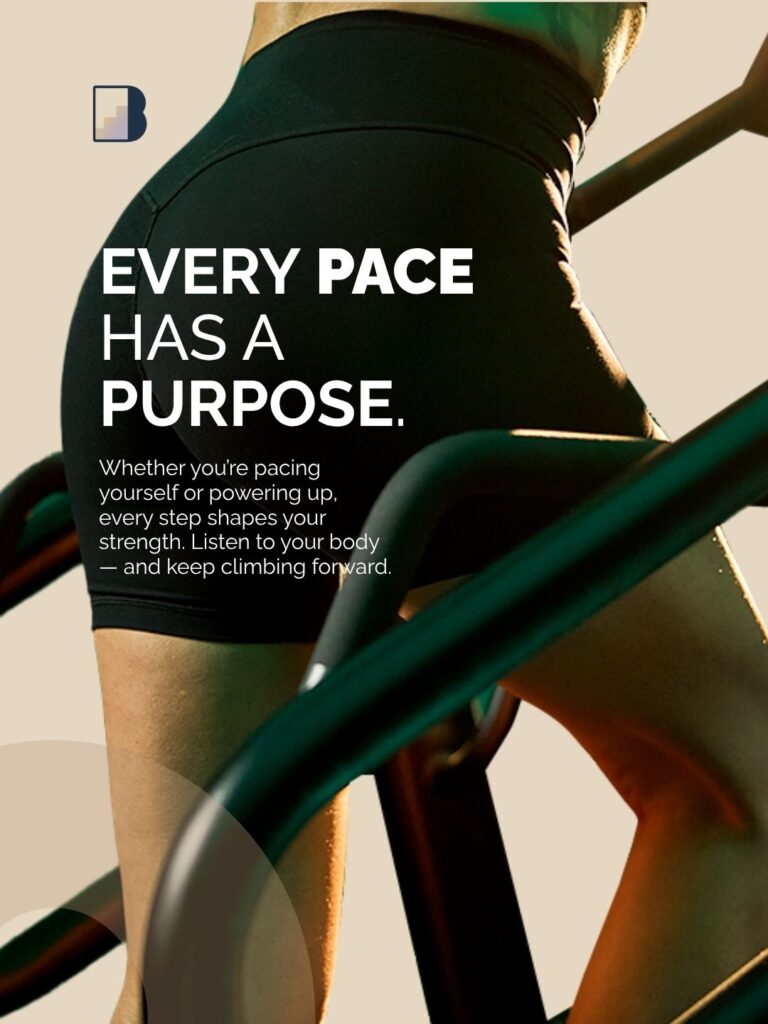
Train Smarter at BOOTIQUE Fitness in Delray Beach
Breathing, posture, cadence—these are skills. And like any skill, they improve with coaching. If you want low-impact cardio that complements strength training (and a method built to create real shape), BOOTIQUE is where you learn the technique that makes the machine work for you.
Train smarter. Breathe better. Lift stronger.
About Brian Kahn
Brian Kahn is a celebrity trainer and the founder of BOOTIQUE Fitness in Delray Beach, Florida. With over a decade of experience coaching high performers, Brian is known for designing workouts with precision—blending low-impact conditioning and hypertrophy-driven strength training to help clients build visible muscle, improve performance, and avoid burnout. The BOOTIQUE method is built around intentional programming and technique-led coaching—so clients get maximum results from every session.

Appendix: Scientific References & Further Reading
Note: This section is for educational purposes and to support further reading.
- Hackney AC. Stress Hormones and Exercise. Journal of Endocrinological Investigation. PubMed
- Gleeson M. Immune Function in Sport and Exercise. Journal of Applied Physiology. Read article
- American College of Sports Medicine (ACSM). Cardiorespiratory Training Guidance (exercise intensity, progression, and safety). ACSM resource overview. ACSM resource
- Phillips SM. Protein “requirements” and resistance training adaptations (overview of protein + training). Applied Physiology, Nutrition, and Metabolism. PubMed
- National Library of Medicine (MedlinePlus). Diaphragm and breathing basics (anatomy and function). MedlinePlus. Learn more